Why GHK-Cu Fades As You Get Older
GHK-Cu levels decline with age in the studied tissues. Here is what that trend does and does not tell you, in plain English.
The first result is the foundational one: GHK-Cu declines with age. This article keeps it tight, because the decline is the result that puts GHK-Cu in every anti-aging writeup — and it is the one most often stretched beyond what it shows.
Why start here? Because every other claim about GHK-Cu — the skin-regeneration research, the gene-expression data, the small human studies — rests on this. If the molecule did not decline with age, and if it were not a signal the body already uses, the rest of the literature would not exist. So this is the result to understand first, and to understand honestly.
The same line we keep throughout this library: this is a population trend, measured across groups and tissues. It is not a statement about you specifically, and it is not a claim that refilling GHK-Cu reverses any outcome. The trend is real and replicated. The application of that trend to a specific person is a different kind of question, with a different standard of evidence.
What was measured / what the data showed
StudyAcross the studied tissues, GHK-Cu levels decline with age. The body still makes the peptide, but the amount circulating drops — a slow drift, not a cliff, and there is variation between individuals. That is the finding, and it is consistent across the published work on the topic.
The foreman image from the main article still works here. As the construction site gets older, the foreman gives fewer orders, and the repair work slows. Roughly that, at the biochemical level, is what the data describe. The signal is still there. It is just quieter.
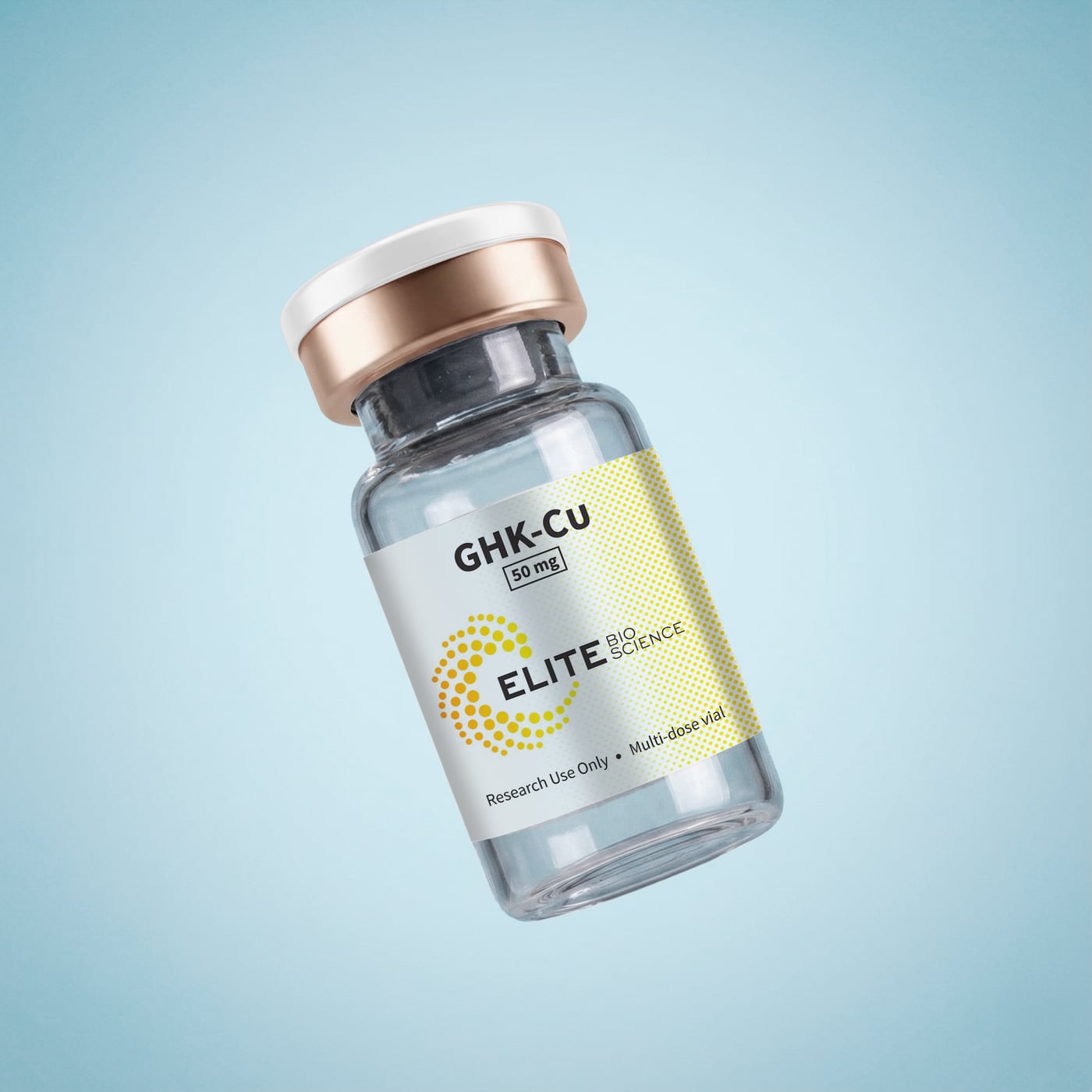
If you are researching GHK-Cu, you can look at the lab-tested form below. If you want a real conversation about what this decline does and does not mean for your situation, start a private chat with our team — we would rather help you think it through than sell you something on a stretch.

What it does and does not tell you
StudyIt is a description of a trend, not proof of causation. It tells you the body's repair signal fades with age. It does not, by itself, tell you that raising GHK-Cu reverses that trend, or that the trend is the cause of any specific age-related outcome in skin.
What it does give you is a framework: the signal fades, and that fade lines up with the things you see in aging skin. That is enough to make GHK-Cu one of the most-studied molecules in skin-repair research. It is not enough to be a claim. Hold those two apart.
This is the single most important distinction in the whole GHK-Cu story, so it is worth saying once more. 'X declines with age' and 'raising X reverses aging' are different claims with different evidence. The first is a measurement. The second is an intervention. The literature supports the first. The literature is still working on the second. Anyone who hands you the first as if it were the second is selling, not explaining.
What it means in practice / why it matters
StudyIf the decline does not prove causation, why does anyone care? Because a reliable, replicated trend that lines up with aging gives the field a target. The signal fades, the repair work slows, and that pairing is consistent across the studied tissues. That is exactly the kind of pattern that makes researchers think the molecule is worth a closer look — not because the trend is a claim, but because the trend is a lead.
A lead is not a conclusion. It is a reason to run the next set of studies — the ones that ask whether moving GHK-Cu moves outcomes. Some of those studies exist, and they are what the next sub-article covers. The decline alone does not get you to a recommendation. The decline plus the marker research starts to.
So hold the result in its honest form: the repair signal fades with age, reliably, in a way that lines up with the things aging does to skin. That is real, and it is enough to make GHK-Cu worth your attention as a research topic. It is not, by itself, enough to tell you what to do. The what-to-do part is a separate question, and we will not pretend otherwise.
More from this research
Talk it through with a specialist
Private, written, no commitment. A research specialist replies on your timeline.
This article is provided for educational purposes only and does not constitute medical advice. These statements have not been evaluated by the FDA and are not intended to diagnose, treat, cure, or prevent any disease. For research use only.