GHK-Cu: The Copper Peptide Studied for Skin and Repair
If you have looked into skin, repair, or the appearance side of the longevity conversation, you have run into copper peptides. GHK-Cu is the one researchers actually study. Here is what the published research shows, in plain English.
If you have looked into skin, repair, or the appearance side of the longevity conversation, you have probably run into copper peptides. GHK-Cu is the one researchers actually study — a small, naturally occurring peptide the body makes itself, bound to a single copper ion. It sits at the intersection of skin, repair, and the gene signaling that coordinates both.
Think of GHK-Cu like a foreman on a construction site. The body is constantly doing repair work — clearing damage, laying down new tissue, rebuilding the extracellular matrix that holds skin together. That work does not organize itself. It needs a signal that tells the crew what to do and when. GHK-Cu is one of the signals the body uses for that job, and the copper ion is not decorative — it is part of how the signal works. Strip the copper off and you have a different molecule with a different effect.
This is where the honest framing matters, because most of what you have read about GHK-Cu online is about 'reversing skin aging.' That is an outcome claim, and the published research does not support it. What the research does show is that GHK-Cu moves markers — repair markers, gene-expression markers, regeneration markers — in research and ex-vivo models, with a handful of small human studies. The markers move. The large, controlled human outcome trials have not been done. We will hold that line throughout this article, because that line is exactly what the sales version of the story erases.
One more thing before we get into it. GHK-Cu is one of the most-studied peptides in the skin-repair literature, and the basic biochemistry is genuinely well understood — it has been for decades. What is less settled is what moving those markers actually does for any specific person over time. The marker research is solid. The outcome research — whether it actually reverses skin aging in humans — is still being written, and most of it has not been written at the scale that would warrant a confident claim. The honest version keeps the marker result and the outcome claim apart. The sales version smushes them together. This is the honest version.
What GHK-Cu actually is
StudyGHK-Cu is a tripeptide — three amino acids (glycine, histidine, lysine) hooked together — bound to a single copper ion. Its full chemistry name is glycyl-L-histidyl-L-lysine copper(II), and in the cosmetics and skin-research literature you will often see it listed as copper tripeptide-1. The body makes it naturally. It shows up in plasma, saliva, and urine, which tells you it is not some lab-only invention — it is a normal part of how the body signals repair.
The copper is part of the signal, not a passenger. GHK without copper is a different molecule with a different effect profile. That is worth knowing because it changes how you read the literature: studies on GHK-Cu are not interchangeable with studies on copper alone or on the peptide alone. The complex is the molecule researchers study, and the complex is the molecule the body uses.
Here is the part that puts GHK-Cu in the anti-aging conversation. Across the studied tissues, GHK-Cu levels decline with age. The body still makes it, but the amount circulating drops. That decline lines up with the things aging does to skin — thinner dermis, slower repair, more accumulated damage. The trend is real and replicated. What it does not tell you, by itself, is that refilling GHK-Cu reverses any of that. That is a different kind of claim with a different standard of evidence, and we will keep the two apart.
A useful way to hold this: the body already uses GHK-Cu as a repair signal. It makes it, it releases it, it sends it to where repair is happening. The decline with age is the body making less of a signal it still uses. That is the framework — the foreman is still on the site, he is just giving fewer orders. What happens when you give him more orders is the question the rest of this article is about, and the honest answer is more limited than the supplement-aisle version implies.
The research: what they actually did
StudyThe headline paper for this set is a 2020 review by Pickart and colleagues — 'The potential of GHK as an anti-aging peptide.' A review is not a single new experiment; it is a synthesis of decades of published work on GHK-Cu, drawn from lab, ex-vivo, and small human studies. Reviews are useful because they let you see a whole field at once, and they are also where the marker-vs-outcome distinction gets blurred most easily, so we will be careful with it.
The research base on GHK-Cu is mostly not large controlled trials. It is lab work — skin fibroblasts and keratinocytes grown in culture — ex-vivo work on human skin samples, organ-culture models, and a small number of cosmetic-application studies in people. The gene-expression findings come from DNA array work, where researchers measure how thousands of genes respond to the presence of the peptide. That is a different kind of evidence than a 500-person randomized trial, and it earns a different kind of confidence — strong on mechanism, weaker on outcome.
That narrowness is not a flaw. It is the standard shape of early-stage peptide research, and it is exactly how the kisspeptin and NAD+ literatures started before the big trials followed. The lab and ex-vivo work tells you the molecule does something real to the cells and tissue you care about. The small human studies tell you the mechanism plausibly translates. The large controlled trials — the ones that would let you say 'this reverses skin aging in humans' — are the part that has not been done yet.
So when you read 'the research shows,' read it carefully. The research shows marker shifts in models and a handful of small studies. The research does not show, at the standard that would warrant a confident claim, that GHK-Cu reverses skin aging in humans. That gap — between what was measured and what gets claimed — is the whole point of reading this literature carefully. We will keep it visible in every section that follows.
What they found
StudyThe 2020 review pulls together four threads worth pausing on, and each one gets its own short article so you can dig into the one you care about most.
First, GHK-Cu is a naturally occurring copper-binding tripeptide whose levels decline with age in the studied tissues. Second, in research and ex-vivo models, GHK-Cu was associated with skin regeneration and improved repair markers — fibroblast activity, collagen production, markers of tissue repair. Third, the peptide shifts the expression of a broad set of genes tied to tissue repair and the extracellular matrix — over a thousand genes in some array work, clustered in pathways that matter for skin structure. Fourth, most of this evidence is from lab and ex-vivo work plus small studies; large controlled human trials are limited.
Read those four as a package. The first two tell you the molecule is real, naturally occurring, and does something measurable in models of skin and repair. The third tells you the effect is broad — not a single pathway tweak but a system-level shift in how repair-related genes are expressed. The fourth tells you how far you can trust the first three, and the honest answer is: far enough to take the molecule seriously, not far enough to call it a reversal of skin aging.
Put yourself in the shoes of a researcher reading this picture for the first time. You have a signal the body already uses, that declines with age, that moves the repair markers you would predict, and that shifts a broad set of repair-related genes. That is a genuinely interesting lead — the kind of pattern that makes a field pay attention. It is not the same as a finished answer, and the cleanest read of the review holds both of those in view. The lead is real. The finished answer is still being written.
Why this matters if you are researching skin and appearance
StudyHere is the honest, near-sales part. If you are reading about GHK-Cu, you are probably not doing it for fun. You are reading because something in your life — the way your skin looks, how it repairs, the appearance side of how you feel day to day — has you looking at the skin-and-repair corner of the longevity picture.
What the research gives you is a framework, not a finished answer. It tells you GHK-Cu is a naturally occurring signal the body already uses for repair, that it declines with age, that it moves the markers you would predict in research models, and that it shifts a broad set of repair-related genes. That is a real foundation. What it does not give you — yet — is large controlled human outcome trials, ideal protocols, or guarantees. The further you get from biochemistry, the thinner the published evidence gets, and 'reverses skin aging in humans' is very far from biochemistry.
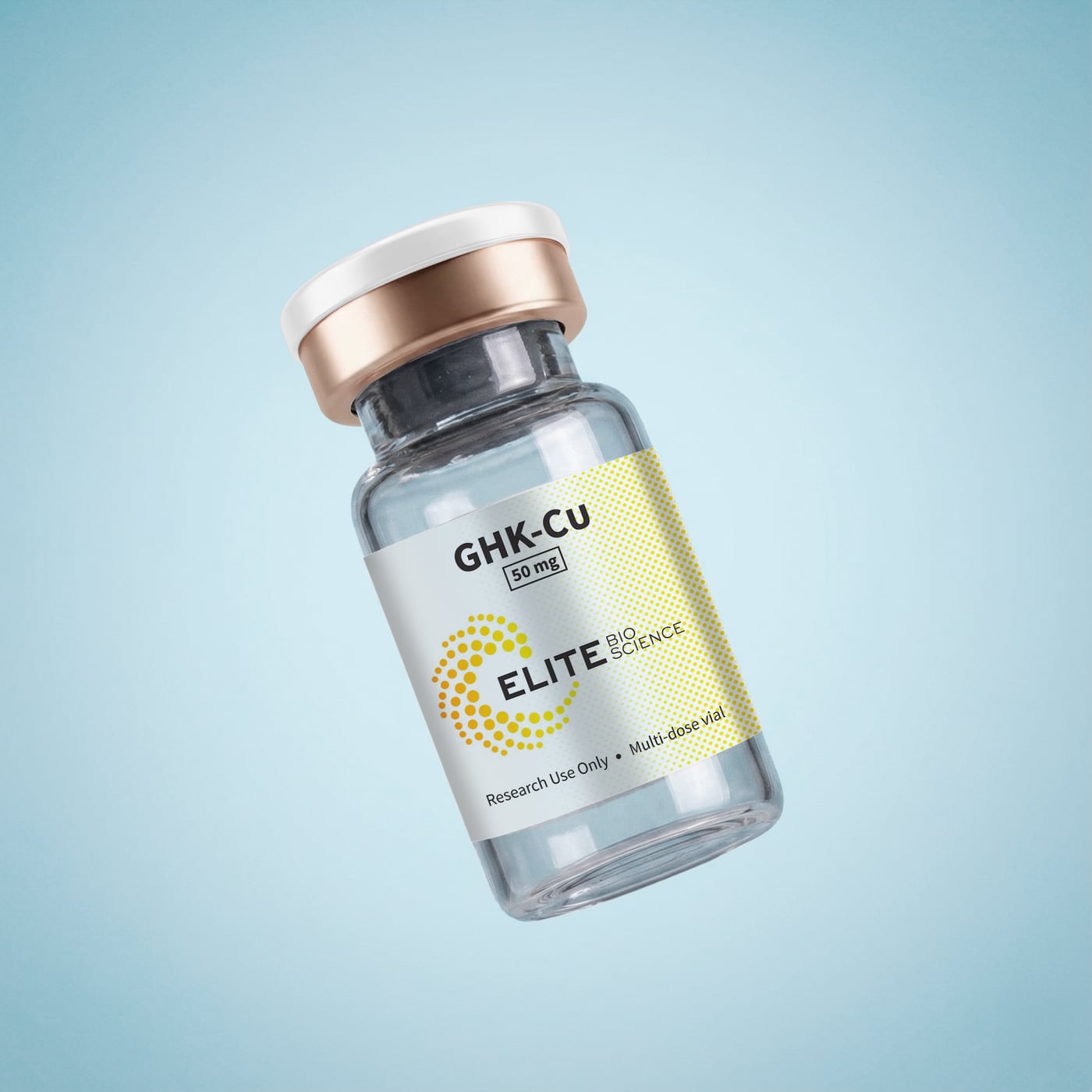
If you want to look at the lab-tested form of the compound researchers study, you can browse GHK-Cu below. If you want to talk through what this research does and does not mean for your specific situation, start a private chat with our team — that is what we are here for, and the conversation is the point, not the sale.
The honest version of 'why this matters' is this: the research gives you a map, not a route. It tells you where the signal is, that the signal works in models, and that the system it touches is the one that governs skin repair and appearance. It does not tell you where to drive. That part depends on your situation, your goals, and the things no published study can know about you. That is exactly the kind of question a real conversation is good at and a blog post is not. We would rather have that conversation with you than pretend an article can replace it.

The honest caveats
StudyThis is not a closed book, and anyone who tells you it is, is selling you something. The published work on GHK-Cu in humans is mostly lab and ex-vivo work plus small cosmetic-application studies. That is a real standard of evidence for mechanism and marker response. It is not the same as large controlled outcome trials in defined populations.
What is still open: large randomized human trials, the gap between marker shifts and the outcomes people actually feel and see, what a sustained approach does over months, and whether the gene-expression shifts translate into clinical-grade skin changes. Researchers are actively working on parts of this, but the bulk of it has not been done at trial scale.
Treat this article as a strong framework with open edges. The biochemistry is solid. The marker response in models is well-replicated. The gene-expression data is broad and interesting. The further you go into 'this reverses skin aging in humans,' the more you are ahead of the literature — and the more you should be talking to someone who will be honest about where the evidence ends.
There is one more honest thing to say. The fact that most of the evidence is from models does not make it weak — it makes it specific. A clean marker result in a fibroblast culture tells you the molecule talks to the cells the way the model says it does. That is genuinely valuable; it is the foundation any longer-term work stands on. The mistake is not in the research. The mistake is in how the research gets reported — a marker shift in a model gets stretched into 'reverses skin aging in humans,' and the stretching is where the trouble starts. Keep the result the size it is, and you keep the truth of it.
Talk it through with a specialist
Private, written, no commitment. A research specialist replies on your timeline.
This article is provided for educational purposes only and does not constitute medical advice. These statements have not been evaluated by the FDA and are not intended to diagnose, treat, cure, or prevent any disease. For research use only.