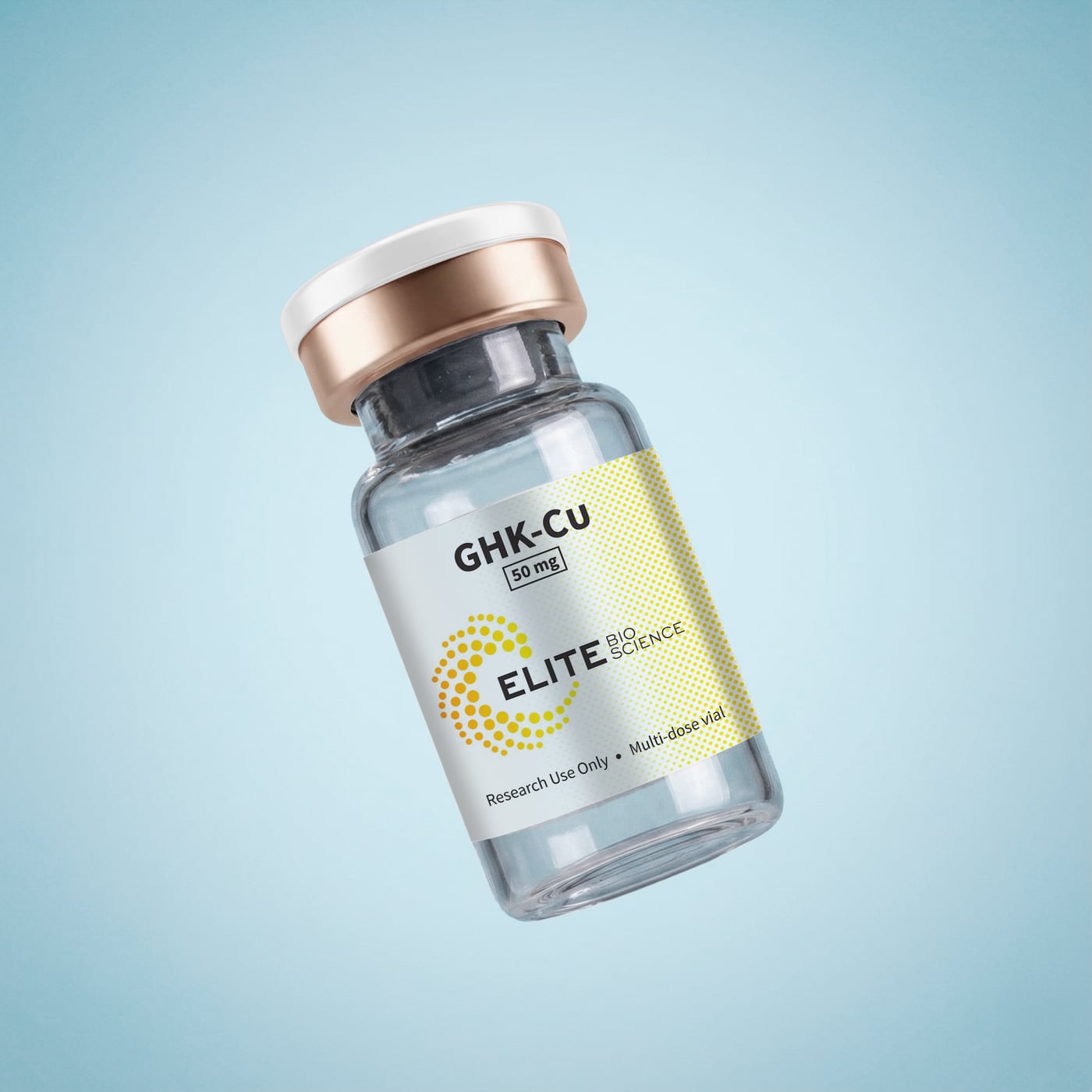
The Gene-Effect: Why GHK-Cu Hits So Many Pathways at Once
GHK-Cu shifts the expression of a broad set of genes tied to tissue repair and the extracellular matrix. Here is what that broad effect does and does not mean.
The third result is the one that makes GHK-Cu interesting at a system level: it shifts the expression of a broad set of genes, not just one pathway. This article unpacks that one finding carefully, because 'broad gene effect' is the kind of phrase that gets stretched into 'resets your cells,' and that is not what the data shows.
Why does a broad gene effect matter? Because most compounds that hit skin-repair research tweak one pathway. GHK-Cu shifts a whole cluster of genes tied to tissue repair, extracellular matrix, and the signaling that coordinates them. That is the signature of a signaling molecule the body uses to coordinate a program, not a single-lever tweak — and it is exactly what you would expect from a foreman-type signal.
The same line applies here as everywhere in this library: a gene-expression shift is a marker result. It tells you the input changes how cells read their own instructions, in the studied models. It does not, by itself, tell you what that changed reading does to a person over time, or that it reverses any outcome. The genes shift. The clinical translation is still being studied.
What was measured / what the data showed
StudyResearchers used DNA array technology — tools that measure how thousands of genes respond at once — to map the effect of GHK-Cu on gene expression. The result was broad: across multiple studies, GHK-Cu shifted the expression of over a thousand genes in some setups, clustered heavily in pathways tied to tissue repair, the extracellular matrix, and the signaling that coordinates both.
That clustering is the part worth pausing on. A random gene shift would be noise. A shift concentrated in repair and matrix pathways is a signal — it tells you the molecule is talking to the program the body uses to organize repair, not just bumping a single output. That is the difference between a foreman giving orders and a worker adjusting one screw.
It is also worth being precise about what a gene-expression result is and is not. It is a measurement of how active a gene is — how much the cell is reading that gene's instructions, in the presence of the molecule versus without it. It is not a measurement of what the cell then does, or what the tissue then does, or what the person then looks like in the mirror. Each of those is a step further from the gene read, and the further you go, the more evidence you need to make the same claim confidently.
What it does and does not tell you
StudyIt tells you GHK-Cu talks to the repair-and-matrix program at the gene-expression level, in the studied cells. It does not tell you that those gene shifts translate into the outcomes people care about — visibly younger skin, faster repair, structural changes in a living person — at any specific level of confidence.
Read this as the third link in the chain: the signal fades with age (link one), the signal moves repair markers in models (link two), and the signal shifts the repair-and-matrix gene program in the studied direction (link three). Each link is real. None of them, alone or together, is the same as a controlled human outcome trial. They are the foundation that makes such a trial worth running, not the trial itself.
There is also a subtlety that gets dropped in popular coverage. A broad gene effect is not automatically a good thing. A molecule that shifts a thousand genes is interesting, and it can also be risky — broad effects can hit pathways you do not want touched, and the same breadth that makes GHK-Cu interesting to researchers is why careful human work matters before anyone calls it safe or effective for a specific use. The honest read of a broad gene effect is 'worth studying carefully,' not 'automatically a win.'
What it means in practice / why it matters
StudyIn plain terms: GHK-Cu does not just nudge one marker. It shifts a coordinated program tied to tissue repair and the extracellular matrix. That is the kind of mechanism that makes a peptide interesting at a research level, because it suggests the molecule is talking to the system the body already uses to organize repair.
What it does not mean is that this broad gene effect is the same as reversing skin aging in humans. The gene shifts are measured in cells and models. The translation to a clinical outcome in a living person is the step the field has not finished, and the honest version of this story keeps that step visible.
The practical read is this: the gene-effect data tells you GHK-Cu is doing something more interesting than a single-pathway tweak. That is enough to make it a serious research target. It is not enough to claim a clinical outcome, and the honest version of this article will not make that claim. Anyone who reads 'broad gene shift in models' and hands you back 'resets your cells' is filling in a gap the data did not address. The honest version keeps the result the size it is.
More from this research
Talk it through with a specialist
Private, written, no commitment. A research specialist replies on your timeline.
This article is provided for educational purposes only and does not constitute medical advice. These statements have not been evaluated by the FDA and are not intended to diagnose, treat, cure, or prevent any disease. For research use only.