Regeneration or Risk? A Narrative Review of BPC-157 for Musculoskeletal Healing
BPC-157 is one of the most-discussed compounds in the recovery and repair conversation right now. You will hear it called a healing peptide, a tendon-repair compound, a recovery aid. Behind the labels is a body of research that is mostly one specific kind — preclinical. Here is what the review shows, in plain English.
BPC-157 is one of the most-discussed compounds in the recovery and repair conversation right now. You will hear it described as a healing peptide, a tendon-repair compound, a recovery aid. Behind those labels is a body of research that is mostly one specific kind — preclinical. That is the single most important thing to know about this compound before anything else.
Think of a torn tendon like a construction site after a storm. The structure is damaged, the crews are supposed to come rebuild it, and someone has to call them in. BPC-157 is the peptide that, in the research, looks like the dispatcher — the signal that calls the repair crews (blood vessels, collagen-producing cells, the cells that clean up damage) to show up at the site and get to work.
That is the image to hold. It is also where the honest framing has to start. Almost all of the BPC-157 research is preclinical — meaning it was done in animal and lab models, not in controlled human trials. That is not a flaw; it is a stage of research. But it does mean you should hold the findings as 'reported in research models,' not as 'proven in people.' The marker-versus-outcome gap is the whole story here, and we will keep it visible throughout.
One more honest point before we get into the science. The BPC-157 literature has a long history — the compound has been studied for decades, mostly in Eastern European research groups, and it has a passionate following in the recovery community. The passion is real. The formal human evidence is thin. Holding those two facts together, without letting either erase the other, is the whole point of this article. The preclinical findings are genuinely interesting. The human outcomes are still being studied. We will keep both in view.
What BPC-157 actually is
StudyBPC-157 is a peptide — a short chain of amino acids — that was first described in the context of gastric juice, where the body uses related signals to protect and repair the lining of the stomach. From that starting point, researchers began studying BPC-157 in a wide range of tissue-repair contexts, including tendon, ligament, muscle, and bone.
What makes BPC-157 interesting in the recovery conversation is the breadth of what it has been reported to touch. In preclinical models, it has been associated with accelerated tendon-to-bone healing, ligament repair, new blood vessel formation at healing sites, and shifts in a range of markers tied to tissue repair. That breadth is unusual — most peptides in this lane have a narrower profile.
The mechanism picture is still being worked out. The compound appears to interact with several repair-related pathways at once — angiogenesis (new blood vessel formation), collagen production, and the signaling that coordinates tissue remodeling. It is the dispatcher image: not one specific crew, but the signal that coordinates several crews.
That breadth is also exactly why you should be careful. A compound that touches many pathways is a compound that is hard to study cleanly, and a compound whose preclinical findings are easy to over-extrapolate. The honest read is: the mechanism picture is interesting and broad, and it is mostly drawn from preclinical work. The human mechanism work is thinner.
The review / what they did
StudyThe headline reference for this set is a narrative review — a 2025 paper by Sikiric and colleagues that summarizes the preclinical and limited human reports on BPC-157 for musculoskeletal healing. A narrative review is not a single new trial; it is a careful synthesis of the existing literature, written by researchers who know the field.
The review pulls together the body of work on BPC-157 and tendon, ligament, and muscle healing — most of it from animal and lab models, with some limited human reports. That is an honest reflection of where this literature actually sits: a preclinical base with a thin layer of human case reports on top.
Why a narrative review rather than a single trial? Because the BPC-157 field does not have one clean, large, controlled human trial that the whole story hangs on. It has a large number of preclinical studies, plus clinical observations and case reports. A narrative review is the right tool for summarizing that kind of literature honestly — it tells you what the field has seen, without pretending it is one definitive study.
It is worth being clear about what a narrative review is and is not. It is a synthesis of the published work, written by experts, and it is genuinely useful for seeing the shape of a field. It is not the same standard of evidence as a randomized controlled trial. It cannot tell you that BPC-157 works in people the way the preclinical models suggest — only that the preclinical findings are consistent and interesting, and that the human reports that exist are limited. That is the honest framing for everything that follows.
What they found
StudyThe review reported four things worth pausing on, and each one matters for a different reason. We have broken each out into its own short article so you can dig into the one you care about.
First, in preclinical models, BPC-157 was associated with accelerated tendon-to-bone healing and ligament repair. Second, reported effects included improved angiogenesis — new blood vessel formation — at healing sites in the studied models. Third, most of the evidence is from animal and lab models; controlled human trials are limited. Fourth, the compound has a long history of described use but a thin formal safety database in humans.
Read those four as a package. The preclinical findings are consistent and interesting — a compound that, in animal and lab models, is associated with faster tendon and ligament repair and with new blood vessel formation at healing sites. The human evidence is thin, and the formal safety database in humans is thin too. That is an honest picture of a preclinical-stage compound with a passionate following, not a proven clinical intervention.
Put yourself in the shoes of a researcher reading this review. You see a body of preclinical work that is genuinely interesting — the same compound, across many studies, associated with repair-related effects. You also see that the human layer is mostly case reports, not controlled trials. That is the shape of a field that has not yet done its confirmatory human work. It is a real field, with a real lead. It is not a finished story. Anyone who tells you it is finished is selling.
Why this matters if you are researching strength and recovery
StudyHere is the honest, near-sales part. If you are reading about BPC-157, you are probably not doing it for fun. You are reading because something — a tendon that will not heal, a ligament that is slow, a recovery that has stalled — has you looking at the repair side of the picture.
What the research gives you is a framework, not a finished answer. It tells you BPC-157 is a compound that, in preclinical models, is associated with the repair processes you care about — tendon healing, ligament repair, new blood vessel formation at the site. That is a real foundation of interest. What it does not give you — yet — is controlled human trials, formal safety data, or proven outcomes in people. The preclinical findings are interesting. The human outcomes are still being studied.
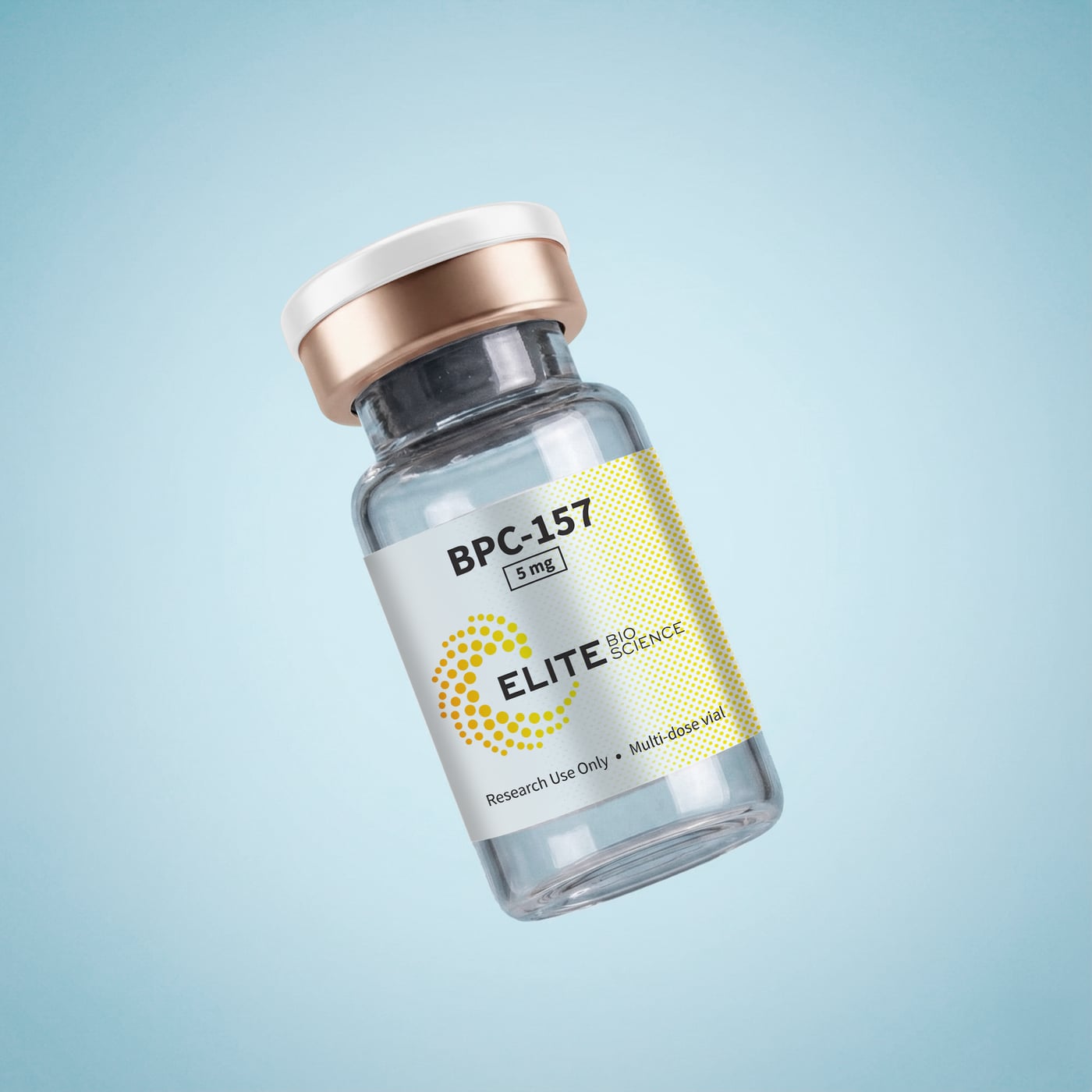
If you want to look at the lab-tested form of the compound researchers study, you can browse BPC-157 below. If you want to talk through what this research does and does not mean for your specific situation, start a private chat with our team. The honest conversation is the point — we would rather help you think clearly than sell you something on a stretch.
The honest version of 'why this matters' is this: the research gives you a map, not a route. It tells you where the interest is, that the preclinical findings are consistent, and that the human work is still ahead. It does not tell you that BPC-157 heals human tendons — that would be ahead of the evidence. Anyone who hands you the preclinical findings as if they were a human outcome is doing the exact move this whole field warns against. We are not going to do that here.

The honest caveats
StudyThis is not a closed book, and anyone who tells you it is, is selling you something. The BPC-157 literature is overwhelmingly preclinical. That is a real standard of evidence for biological plausibility and mechanism. It is not the same as evidence in people.
What is still open: controlled human trials, formal human safety data, the comparison with standard-of-care approaches, the interaction with other repair signals, and the gap between animal-model findings and human outcomes. Researchers are working on some of it. Much of it is still ahead of the field.
Treat this article as a strong framework with open edges. The preclinical findings are consistent and interesting. The human evidence is thin. The further you go from 'reported in animal models,' the more you are ahead of the literature — and the more you should be talking to a specialist who can ground the conversation in what is actually known.
There is one more honest thing to say. Preclinical findings are not weak — they are a specific kind of evidence. A consistent body of preclinical work tells you the compound is worth taking seriously and worth the human studies that would confirm or revise the findings. The mistake is not in the preclinical work. The mistake is in how the preclinical work gets reported — a finding in an animal model gets stretched into a human-outcome claim, and the stretching is where the trouble starts. Keep the result the size it is, and you keep the truth of it.
Talk it through with a specialist
Private, written, no commitment. A research specialist replies on your timeline.
This article is provided for educational purposes only and does not constitute medical advice. These statements have not been evaluated by the FDA and are not intended to diagnose, treat, cure, or prevent any disease. For research use only.